
Casa d'Ambra
The heroic wines of the green island: Biancolella from the steep volcanic terraces of Ischia, made by a family that has been doing this for more than 130 years.
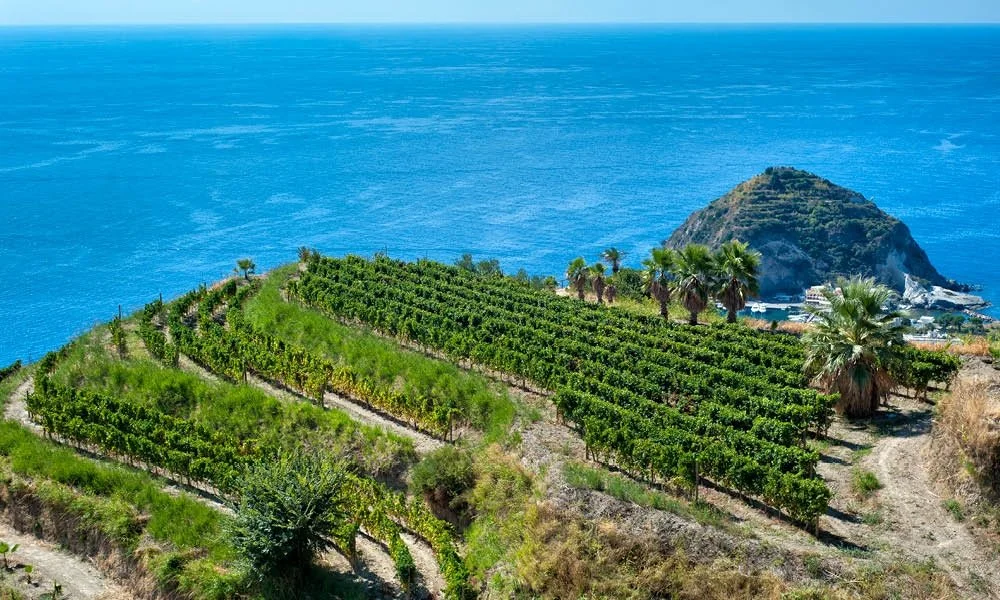
To approach Ischia by sea is to witness a paradox: a lush, verdant island that rises violently from the Bay of Naples, its beauty born from the fire of ancient volcanoes. Known as the "Green Island," Ischia is famous worldwide for its thermal spas and holiday resorts, but for the true wine lover, it is hallowed ground—a place where winemaking is less an agricultural endeavor and more an act of extreme mountaineering. Here, viticulture is defined as "heroic" not for marketing effect, but as a literal description of the labor required. The vines cling to precarious, hand-carved terraces on sheer cliffs that plunge dizzily into the sea, rooted in soft, porous volcanic tuff that remembers the island’s fiery origins.
Since 1888, one family has stood as the unwavering guardian of this fragile, difficult, and majestic terroir: Casa d'Ambra.
The story begins with Francesco D'Ambra, known to the islanders as "Don Ciccio," who founded the estate in the late 19th century, dedicating his life to the vine. But it was the second generation—his sons Mario, Michele, and Salvatore—who truly put Ischia on the map, fighting for and successfully obtaining the DOC designation for Ischia wines in 1966. They transformed a local tradition into a model of viticulture, modernizing the production of native varieties like Biancolella, Forastera, and Per' 'e palummo while respecting the ancient landscape.
Today, that legacy is carried forward by the fourth generation. Enologist Andrea D'Ambra, along with his daughters Marina and Sara (herself an enologist), leads the estate with a philosophy that balances deep roots with innovation. They continue to resist the easier path of tourism to preserve the island's ancient oenological soul, crafting wines that are as dramatic and singular as the landscape itself.
Winemaking here is not a pastoral idyll; it is an act of extreme will. It’s a place where the sea breeze encrusts the grapes with salt, and the sun reflects off the water to ripen them to perfection. These are wines of light, wind, and fire.
“There is something about the wines of Casa D’Ambra that is so thrilling and unique. The combination of terroir ... together with over 130 years of family winemaking experience makes the difference.” — Eric Guido, Vinous