
Biodynamic Elegance in Argentina: Bodega Chacra

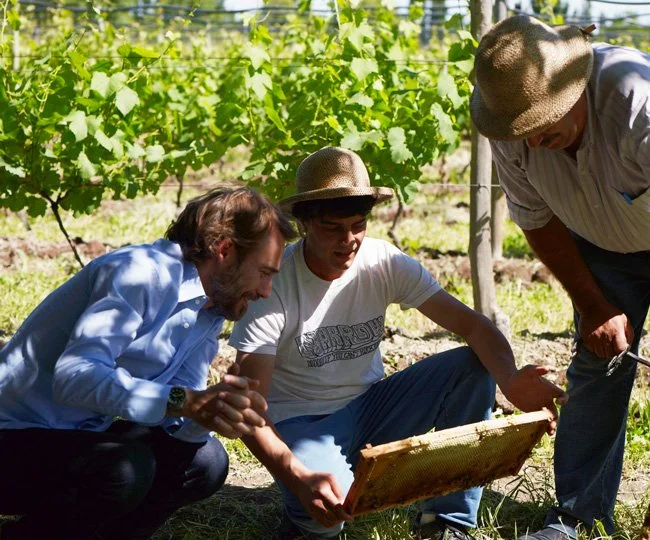
Bodega Chacra is not your average Argentine winery. Nestled in the remote Río Negro Valley of northern Patagonia, this biodynamic estate has quietly redefined what’s possible in South American winemaking—especially with Pinot Noir.
To understand why Chacra is special, however, you have to start with its founder: Piero Incisa della Rocchetta, a man born into an established wine family but eager to pursue his passion beyond his place of birth. As the grandson of Marchese Mario Incisa della Rocchetta, the legendary creator of Sassicaia—one of Italy’s most iconic wines—Piero had access to decades of Tuscan winemaking tradition. But rather than remain in Bolgheri, he turned south.
His moment of inspiration came in the early 2000s, when Piero tasted a Patagonian Pinot Noir at a blind tasting of Pinot Noirs in New York. The wine was striking—not flashy or flamboyant, but pure, mineral-driven and brimming with energy, as he recalls. To his surprise, it was from Patagonia. After a few years of searching for the ideal Patagonian vineyard to begin a winemaking project, in 2004, he bought a parcel of near-abandoned vines planted in 1932. That vineyard, now known simply as Treinta y Dos, became the heart of Chacra and still produces the top wine of the estate.
Piero chose the name “Chacra” for his new project because it refers to a traditional term for a small farm used for cultivating fruit, but because it also refers to the “vital energy centers that provide us with the ability to connect with the whole universe,” as he describes. He was immediately taken with the pure, unpolluted beauty and vibrancy of Patagonia and believes that this quality transfers directly into the wines.
Bodega Chacra now spans several vineyards, with additional plots dating from 1955, as well as newer plantings, all farmed organically and biodynamically. These practices aren’t just for show; they’re central to Piero’s belief that healthy soil and biodiversity create wines with depth and complexity.
Patagonia also offers a unique set of growing conditions. In this part of Southern Argentina, located about equidistant from the Andes mountains and the South Atlantic Ocean, the climate is marginal for winegrowing, with frost always a concern. The dry climate, high elevation, intense sunlight, and alluvial soils create a balance that is rare in the New World.
At Chacra, everything is done by hand, from harvesting to sorting, with native yeast fermentations and elevage in mostly neutral oak or concrete to preserve freshness. The results are compelling: a lineup of Pinot Noirs—Barda, Lunita, Cincuenta y Cinco, and Treinta y Dos—that are refined, expressive, and surprisingly age-worthy.
In addition to the Pinot Noirs, Chacra produces distinctive and memorable Chardonnay, crafted in collaboration with Jean-Marc Roulot of Burgundy, who is a longtime friend of Piero’s. These wines are luminous and almost vibrating with energy, made with a clear nod towards Burgundy but with an entirely Patagonian clarity of fruit.
Beyond producing wines that seem to get better with every vintage, Chacra is also crafting wines that speak not just of place, but of intention. Under Piero’s stewardship, Chacra has become one of Argentina’s most respected estates—one that is redefining elegance in South America.
2024 Bodega Chacra "Mainqué" Chardonnay Rio Negro Patagonia $69.99 97JS Made in collaboration with Jean-Marc Roulot, the Mainque Chardonnay is picked early to maintain acidity and barrel-fermented with malolactic conversion blocked. It is then aged for 10 months, 18% in concrete eggs, 25% in stainless steel and 57% in French oak barreks (12% new) to maintain vibrancy and freshness. The resulting style is liner and crisp, with a high level of citrus-driven purity and a distinct sense of restraint.
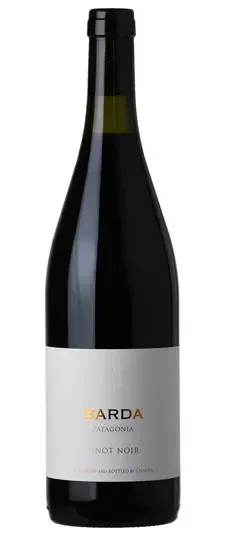
2024 Bodega Chacra "Barda" Pinot Noir Rio Negro Patagonia $34.99 94JS Produced from Chacra’s youngest vineyards, Barda was conceived to be consumed while still fresh and young. The vineyards, planted in 1990, grow on slightly sandy soils and are ungrafted. The wine is fermented at low temperatures in round cement tanks, with natural and unfiltered indigenous yeasts. 50% of the wine is aged in concrete tanks, and 50% is aged in French oak barrels (15% new) for 11 months.
2024 Bodega Chacra "Lunita" Pinot Noir Rio Negro Patagonia $69.99 97JS 94TA Lunita is made from a very old, un-grafted, tiny vineyard. In prior years, the grapes of the Lunita vineyard were destined to Barda, but as the vineyard was nourished back to life, it showed the quality to stand on its own. Lunita’s grapes are picked early in the morning and are fermented in an open cement tank with 100% whole clusters. The wine then ages for 11 months in concrete tanks to preserve freshness and a vibrant, youthful style.
2024 Bodega Chacra "Cincuenta y Cinco" Pinot Noir Rio Negro Patagonia $69.99 97JS 96WA 95TA Cincuenta y Cinco (55) comes from vineyards planted in 1955 which gently rest on a sea of pebbles. It is fermented whole cluster at very low temperatures, enhancing the delicate, floral characteristics of the wine. The wine is aged for 11 months in 50% concrete tanks and 50% 2nd, 3rd and 4th use French oak barrels.
2023 Bodega Chacra "Treinta y Dos" Pinot Noir Rio Negre Patagonia $159.99 99JS The flagship wine od Chacra, the Treinta y Dos (32) is a single vineyard wine, made from old vineyards planted in 1932 on a land layered with clay, sand and pebbles. The most structured of all Chacra’s wines, Chacra Treinta y Dos is meant to be aged. Its soft characteristics and velvety tannins, however, make it drinkable at a younger age. 45% of this wine is aged for 19 months in concrete tanks, and the remaining 55% is aged in 2nd, 3rd and 4th use French oak barrels.