
2025 Bordeaux: The Case for Buying Now

This is a fascinating time for Bordeaux. The wines are as good as they have ever been, and pricing for many releases has fallen to levels that remind us of campaigns from a decade ago. Few regions in the world can offer this combination of pedigree, quality, ageability, and value.
Why the Bordeaux Market Looks the Way It Does
The downside is that these conditions have placed enormous pressure on the Bordeaux marketplace itself. For decades, the model worked remarkably well: sell a portion of production to a global audience in advance, build long-term value through scarcity and reputation, and maintain consistency from vintage to vintage. A combination of soft global demand and a few self-inflicted pricing mistakes disrupted that formula. Inventory has backed up throughout the system, creating pressure from the château level all the way through the négociants. The consumer, however, is the beneficiary.
One of Bordeaux's modern challenges is that there are simply too many good wines. Advances in vineyard management and winemaking have elevated quality across the region, while warmer growing seasons have made full ripeness far more achievable than it once was. The result is a concentration of high-quality vintages and high-quality wines that makes it difficult for scarcity alone to drive demand. But scarcity doesn't make the wine—what's in the bottle does.
The Value Has Never Been More Obvious
The wines available today are extraordinary relative to both price and the broader collectible wine market. Not long ago, a 97-point Bordeaux was generally a three-figure purchase. Today, you can buy wines like 2022 Laroque, which earned multiple 97-point reviews from respected critics, for well under $50. Bordeaux continues to produce wines of exceptional quality at prices that are increasingly difficult to match elsewhere.
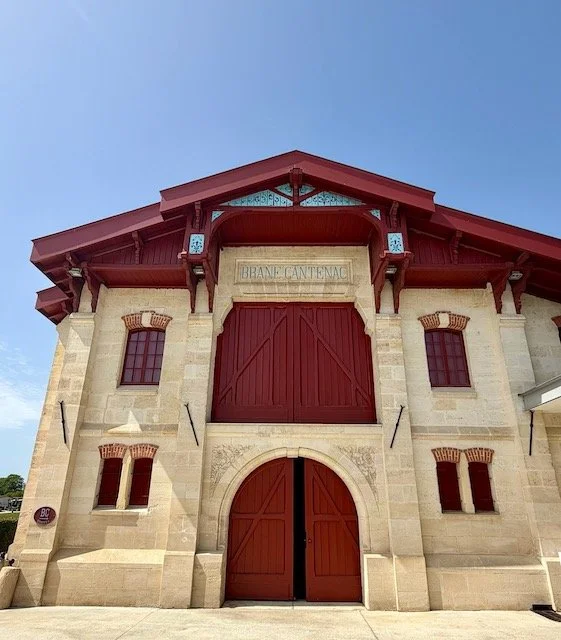
Even at the upper end of the market, the quality continues to rise. Traditional stars such as Montrose, Léoville Barton, and Pichon-Lalande are producing some of the best wines in their histories without sacrificing their identities. Long-established classics like Giscours, Brane-Cantenac, Haut-Bailly, and Branaire-Ducru continue to improve. At the same time, ascendant estates such as Canon, Beau-Séjour-Bécot, and Les Carmes Haut-Brion are making wines capable of contending for wine-of-the-vintage honors. Many of these bottlings remain under $200, with plenty comfortably below $100. Too. Many. Good. Wines.
Should You Buy 2025 Bordeaux En Primeur?
The central question of any futures campaign is simple: why buy now? Traditionally, the answer has been scarcity, pricing, or both. While there are plenty of skeptics today, I would argue that buying early proved to be a winning decision in vintages like 2015, 2016, 2019, and 2023, and I believe 2025 belongs in that conversation. Somewhere along the way, many collectors began treating the flash-in-the-pan success stories—2009 Pontet-Canet or 2015 Canon—as the expectation rather than the exception. That's not how futures work.
The best futures campaigns don't require finding lightning in a bottle. They require identifying great wines at prices that are unlikely to look better several years from now. For many of the wines released so far, that equation still works. Don't expect every bottle to double overnight, but don't be surprised if your 2025s look like very smart purchases when they're finally ready to drink.
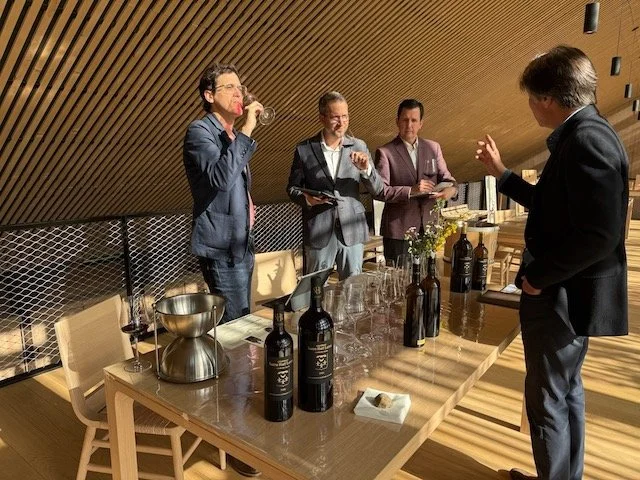
K&L’s Bordeaux Team tasting at Smith-Haut-Lafitte.
- Ryan Moses, K&L Bordeaux Buyer
Ready to buy? Browse our full selection of 2025 Bordeaux futures, or read Ryan's vintage picks.