
Exploring the Cooler Side of the Southern Hemisphere
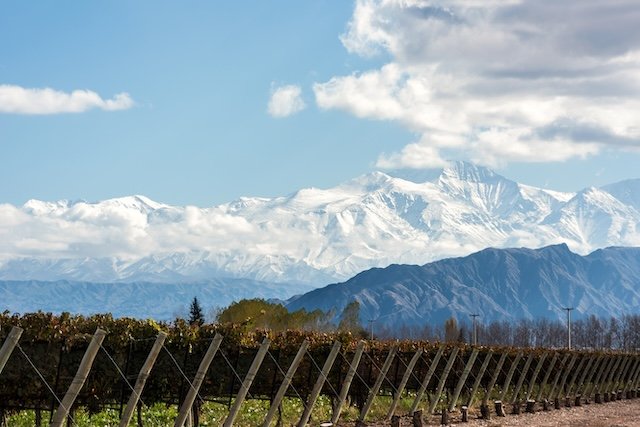
The Southern Hemisphere has always been closely associated with ripe, full-bodied wines: think Barossa Shiraz, South American Bordeaux blends, and the flamboyantly tropical style of Sauvignon Blanc that helped put New Zealand on the world's wine map. But some of the most exciting wines being produced in the Southern Hemisphere today are made in more marginal areas, often close to the ocean or high in the mountains. A new generation of white wines is being defined not by power, but by freshness, acidity, and precision. If there is a common thread tying these wines together, it is energy. Cool growing conditions allow grapes to retain natural acidity while developing ripe, expressive fruit. Below are a few of my top selections:
Scores: SK Sam Kim, BC Bob Campbell MW, JS James Suckling, RP Wine Advocate, JH James Halliday, VN Vinous, WS Wine Spectator, TA Tim Atkin MW, DES Descorchados.
New Zealand Riesling: Marlborough and Otago
New Zealand may have built its reputation on crisp, zesty Sauvignon Blanc, but the country's cool climate is equally well-suited to producing aromatic whites of remarkable freshness and character, with Riesling being one of the most noteworthy examples. Longtime direct import partner Te Whare Ra (TWR) sends us their fantastic Sauvignon Blanc every year, which just seems to get better and better, but their Rieslings are also not to be missed. The 2022 TWR (Te Whare Ra) "SV5182 - M" Riesling Marlborough $19.99; 96SK 95RP 92BC 91JS is a beautiful example: medium-dry in style (27 g/L of residual sugar), 9.5% alcohol, but with an electric acidity that keeps its citrus and stone-fruit character incredibly fresh. The 2022 TWR (Te Whare Ra) "SV5182 - D" Riesling Marlborough (Dry) $19.99; 93RP 92JS, by contrast, is dry, with a more moderate 12.5% alcohol and dense lime, wet stone and citrus zest character. Also from Marlborough, the 2025 Fromm Riesling Spätlese Marlborough $24.99 takes its inspiration from the great wines of Germany's Mosel Valley, perfectly balancing about 80 g/L of residual sugar with incredibly high acidity that makes the wine feel feather-light and a perfect foil for spicy foods. Further south, Valli's 2025 "Waitaki" Riesling, from the coolest area of Central Otago, itself New Zealand's most southerly and marginal region, is delicately off-dry with 15 g/L of residual sugar, combining delicate floral and citrus aromas with a fine-boned palate and that classic streak of brisk acidity.
Australian Chardonnay: Gippsland, Tasmania, and the Yarra Valley

Across the Tasman Sea in Australia, Chardonnay shows just how dramatically the country's wine identity has evolved. Australia may still be famous for muscular, fruit-forward red wines, but the country's coolest regions are also producing whites that can stand comfortably alongside the world's best. In Gippsland, Victoria, Bass Phillip has long been one of Australia's most distinctive estates, most well-known for their extraordinary Pinot Noir, but increasingly for Chardonnay as well. The estate is now owned by Jean-Marie Fourrier of Burgundy's Domaine Fourrier, and the wines have skyrocketed in both quality and popularity. The 2022 Bass Phillip "Premium" Chardonnay Gippsland Victoria $89.99; 97JH 96JS is a wine of richness, counterbalanced by fresh acidity and savory undertones, with pear, lemon oil and baking spice all woven together. Further south, Tasmania is one of the most naturally suited regions in Australia for producing cool-climate Chardonnay. The island's maritime climate creates a long, slow growing season that allows the grapes to retain acidity while developing intense flavor. The 2022 Dalrymple Chardonnay Coal River Tasmania $29.99; 93JH captures that balance beautifully, combining lemon pith with subtle oak and hazelnut notes, as well as a slightly creamy mouthfeel. Further north, in Victoria's Yarra Valley, Giant Steps has become one of the great champions of terroir-driven Australian Chardonnay. The 2024 Giant Steps "Circle of Fifths" Chardonnay Yarra Valley Victoria $49.99; 96JH 95JS 94RP 94WS 93VN brings together fruit from all five of the estate's single-vineyard sites, creating a wine that combines concentration with precision. The wine's palate is both textural and polished, driven by a firm mineral core.
High-Altitude Whites from Chile's Maule Valley
Perhaps some of the most surprising examples of cool climate whites, however, come from South America, where altitude can be just as important as location. In Chile, Laberinto works with vineyards in the foothills of the Andes, a region characterized by high diurnal temperature shifts, varied soils, and volcanic influence. The 2025 Laberinto "Cenizas" Sauvignon Blanc Valle de Maule $21.99; 95TA 94JS is strikingly mineral-driven and high-acid, with pure citrus fruit and a distinct salinity that makes it feel more like a wine from the Old World. Even more surprising, though, is the 2023 Laberinto "Arcillas" Riesling Valle de Maule $21.99; 97TA 93DES 92RP. Bone dry and fermented in concrete and amphora, it favors texture over fruit or floral notes, and finishes on a distinctly savory, almost herbal note.
These wines are a reminder that the Southern Hemisphere is not a single style or even a single climate, and some of its most compelling wines are coming from the places where the growing conditions are just a little bit tougher. The results, however, speak for themselves.