
Burgundy and Beyond: The Storied History and Current Vintages
There are few rollercoaster rides in the wine world quite like being a Burgundy fan. I like to joke that if you just look at a bottle wrong, it might decide to spite you and have an “off day” when you open it. Being one of the most finicky fine wines, it raises the question: why do people chase it so fervently? Because when you catch it at the right time, there is no taste more glorious, wine or not. A bottle of Burgundy in its finest form carries nuance and depth that is paralleled only by the finest flavors in existence on Earth far beyond wine.
I speak from experience, as a bottle of 2005 Méo-Camuzet Vosne-Romanée 1er Cru changed the course of my life. Over a decade ago, it was the first wine I tasted that absolutely stopped me in my tracks—a core memory, some might say. The flavor was so flawless that I found myself not even wanting to drink water if it meant I could savor it just a bit longer. Since my twenties, when I had the luxury of going in on bottles like this with friends just to taste, the fine wine scene has changed immensely. Prices have risen wildly, and the top wines have become even scarcer. Burgundy has seen a nearly exponential increase in price, to the point where many lament the high barrier to entry—not just for collecting but even for enjoying it at all.
For those interested in exploring Burgundy, there are ways to get started without throwing caution to the wind or waiting ten years to reap the benefits of an investment. In fact, you can begin today or tomorrow to discover your personal preferences in the complex world of Burgundy. To contextualize this complexity, there are over 4,000 domaines and 100 designated appellations in Burgundy spread over about 75,000 acres, with each producer making anywhere from one or two to over 20 different cuvées. By comparison, our neighbor Napa Valley has around 475 wineries spread across 45,000 acres of vineyard land.
A Short History Intermission
Why are there so many producers crammed into the mere 75,000 acres of Burgundy?[1] The answer lies in nearly two millennia of data collection. The first archaeological evidence of viticulture in Burgundy dates as far back as the 100s A.D., with the first written record following in 312 A.D.[2] Some argue that winemaking has been part of these lands since as far back as 600 B.C.E., before the Roman Empire even marched across modern-day Europe.[3]
By 587 A.D., the winemaking potential was established, and vineyards were being donated to the monastery of St. Benignus in Dijon, which marks the beginning of Burgundy's storied vineyard-management journey into what we see and taste today. Over the centuries, land was gifted to different monastic orders, with the Cistercians planting more vineyards and profiting from their ventures alongside the Benedictines who made wine more for their own enjoyment. These monks kept meticulous records of vineyard sites, such as sun exposure and soil types, winemaking techniques, weather patterns, and more, laying the strong foundation for the concept of terroir as we know it today. No other wine region has such excellent records to build upon, and these historical records underpin the vineyard designations we see today. When pondering how it is that the mere 1,400 acres of Grand Cru sites produce the most expensive bottles on the market, their pedigree is based on this nearly two millennia of documented research around which sites produce the most enjoyable, complex, and age-worthy wines possible.
Nearly a thousand years after records began, as Burgundy became part of the Kingdom of France in the 15th century, the elite began purchasing land and making wine, slowly diminishing the church's influence. Then, the French Revolution in the 18th century saw that land confiscated from both the church and aristocrats and sold off to private buyers.[4] In 1804, the Napoleonic Code, which still effects French law today, further shaped Burgundy by mandating that estates be divided equally among heirs, rather than passing solely to the eldest son. Nine generations later, this has led to extreme subdivision of properties, increasing land value, and the attraction of corporate interest—both domestic and foreign—in Burgundy's vineyards, particularly for the vulnerable who do not wish to follow in their ancestors’ footsteps.
The Importance of Tastings
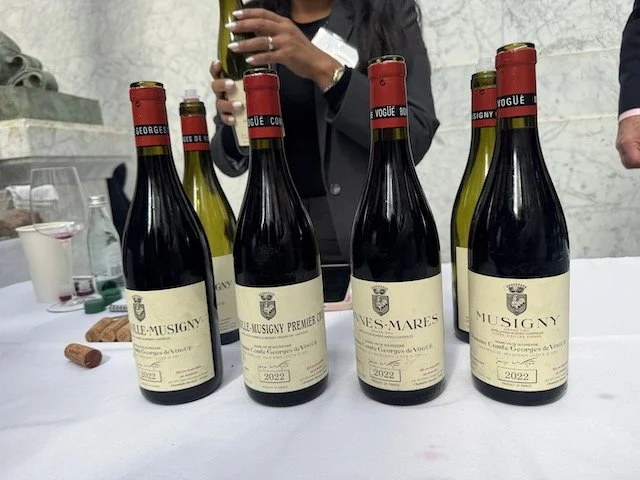
Faced with such an intricate history and sheer number of producers, even seasoned wine aficionados can find Burgundy intimidating. My best advice for newcomers is to invest in tastings. Trying to explore Burgundy by opening full bottles is like trying to find the best car for you by buying one, driving it for five years, and then moving to the next every few years. Tasting even a few wines side by side for a fraction of the bottle cost is invaluable. At the risk of tooting our own French horn, K&L hosts plenty of excellent tastings—we even opened 2022 Domaine Comte de Vogüé Musigny Grand Cru Vieilles Vignes $1,139.99 95-100JM 99JS 98DC 94-97BH 95TA just for fun last year—and I encourage you to keep an eye on your local stores event pages for accessible tastings.
For the committed or ultra-curious, no tasting is more worthwhile than the annual La Paulée, which celebrated its 25th anniversary in 2025 by setting up shop in San Francisco for a weekend. While tales of multi-thousand-dollar bottles at some events may sound intimidating, there are several more approachable tastings and events that run in the few-hundred-dollar range.
This year, I attended the Grand Tasting, which showcased the 2022 vintage. With over 20 top producers pouring 2-5 wines each—including rare Grand Cru cuvées from François Raveneau, Anne Gros, Roulot, Clos de Tart, Thibault Liger-Belair, Dugat-Py, Henri Gouges, Comte Georges de Vogüé, Bruno Clair, Robert Chevillon, and more—the $425 ticket was well worth the opportunity to contextualize some of Burgundy's finest producers and wines.
The 2022 and 2023 Vintages
The 2022 vintage has been a joy to be a part of. According to Decanter's Charles Curtis, “Despite the (very) hot and dry season, 2022 wasn’t a typical année solaire,” highlighting the vintage's surprising quality, quantity, and versatility. There are “many early-drinking options, but reds to lay down, too.” With both vines and growers adapting to climate change, 2022 was a resounding success—by luck, nature, and talent alike. After tasting nearly 100 wines from the vintage, I couldn't agree more.
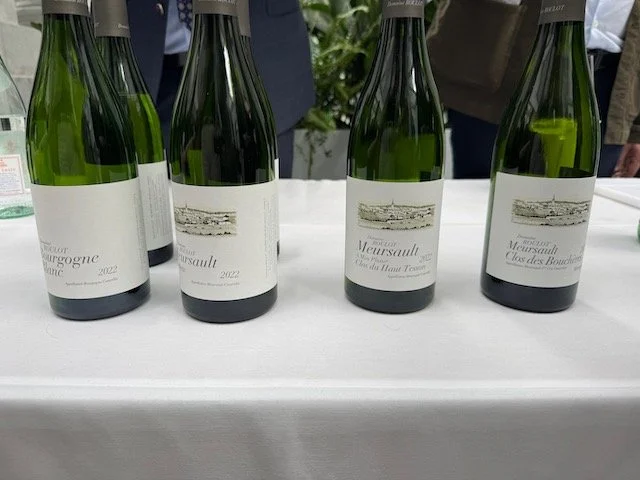
At La Paulée’s 2022 tasting, the wines ranged from Anne Gros’ Vosne-Romanée “Les Barreaux,” made from 103-year-old vines and exuding elegance and brightness, to the brooding, age-worthy Clos de Tart Grand Cru, which promises increasing complexity over time. Bruno Clair’s wines exhibited incredible typicity, with Bonnes Mares showing bright acidity, lovely juicy cherry character, and a long, savory finish leaving me jealous of anyone who gets to experience more than a few sips. The de Vogüé family's 2022s were aromatic and balanced, a testament to centuries of experience adapting to changing conditions. The winemaking changes over the last two decades by Domaine Henri Gouges were abundantly evident, as I could not believe my notes included, “Elegant and bright fruit,” for the Les Saint Georges, as my own bottles of 2006 are likely far from showcasing anything elegant to date. The wines of another famed Nuits-Saint-Georges domaine, Robert Chevillon were also strikingly harmonious, with critics widely agreeing. Their Les Saint Georges was awarded up to 96 points by Jasper Morris and William Kelley, quite a feat for a sub-$300 bottle that was historically quite tannic in its youth.
The whites in general, including the great Roulot wines, displayed less characteristic reduction than expected and retained a bit of baby fat that I hope will shed over time, but overall, they were beautifully balanced and should develop exceptionally well.
For those new to Burgundy, I encourage you to experiment with both vintages, especially side by side. Entry-level Village and many Premier Cru wines will showcase great typicity without requiring extensive aging. Some highlights for adventurers include the 2022 Domaine Jean Grivot Chambolle-Musigny "La Combe d'Orveau" $119.99 96DC, 2022 Domaine Bruno Clair Marsannay Rouge "Grasses Tetes," and the 2022 Domaine Francois Carillon Chassagne-Montrachet $119.99 90-93JM. For collectors, there some Grand Crus are the 2022 Duroché Chambertin-Clos de Bèze, 2022 Domaine Robert Groffier Bonnes Mares Grand Cru $999.99 95-98JM 96DC, and 2022 Roumier Chambolle-Musigny 1er Cru "Les Cras."
As 2023 wines begin to roll in, they offer a solid and puzzle-like follow-up to the 2022 vintage. The 2022s are both enjoyable now and structured enough to age, while the 2023s provide charming, balanced wines for short- to mid-term drinking. With the 2024 vintage expected to be somewhat of a challenge, stocking up on 2022 and 2023 wines could carry collectors and explorers alike through uncertain times ahead.
Our Private Client Services Team is happy to help strategize for your cellar or guide you through an exploration. Please reach out to our team! And explore some of our top picks below:
2022 Albert Grivault Meursault 1er Cru "Les Perrières" $169.99 95DC
2022 Domaine Bachelet-Monnot Meursault "Clos du Cromin" $109.99 90-92JM
2022 Domaine de Montille Puligny-Montrachet $99.99 90-93JM
2022 Domaine François Carillon Chassagne-Montrachet 1er Cru "Les Macherelles" $189.99 90-92JM
2022 Domaine Michel Niellon Chevalier-Montrachet Grand Cru $849.99 98DC 95JM 95TA 95VN 94BH
2022 Domaine Georges Mugneret-Gibourg Vosne-Romanée $499.99 90-91WA
2022 Domaine Hudelot-Noëllat Vougeot 1er Cru "Les Petits Vougeot" $223.99 92-95JM 91-93BH 91-93WA 90-92VN
2022 Domaine Robert Chevillon Nuits-St-Georges Vieilles Vignes $89.99 89-91BH
- Chelsea Herholdt, Private Client Services Advisor