
2025 Bordeaux Right Bank: Saint-Émilion and Pomerol


Where the Left Bank impressed with structure and precision, the Right Bank was about texture. We spent the first half of our trip across the Médoc and Pessac-Léognan, and the wines were stunning. But the moment we crossed to the Right Bank, the whole character of the vintage shifted under our feet. Where the usual suspects of the Haut-Médoc and the Graves showed depth and promise, the Merlot- and Cabernet Franc-dominated wines of Saint-Émilion and Pomerol gave us something more generous — silky, expressive wines layered with minerality.
Saint-Émilion:
The Limestone Pays Off
Saint-Émilion was one of the clear winners of the 2025 vintage. While much of Bordeaux wrestled with the smallest crop in a generation, the limestone and clay-limestone plateau here held remarkably steady, with yields down only about 10% when many neighbors were off by a third or more. Credit the limestone and its remarkable ability to regulate water.
The wines reflect it. The plateau and the côte produced the most complete Saint-Émilions of the vintage, and they share a signature: lifted aromatics, real mineral drive, and a core of bright red and blue fruit wrapped around refined, well-integrated tannins—which is no small feat this early in their evolution. There is a stony, savory quality to the best of them that I found genuinely compelling. In hot years, Saint-Émilion can tip into very ripe, high-alcohol territory, but that simply wasn't the case in 2025. The wines are beautifully concentrated and yet they hold onto a wonderful freshness. They aren't overblown, and they aren't the opulent Saint-Émilions of 2022 either. They're tighter, more energetic, built on freshness rather than weight, and they'll age beautifully for it.
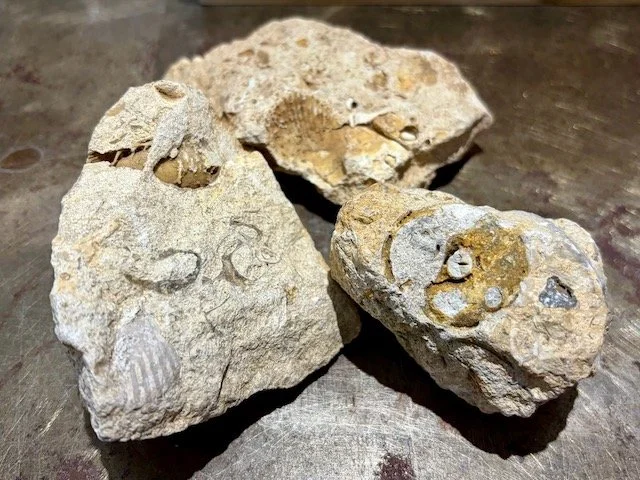
Fossiliferous limestone in St-Émilion.
Many will need a few years to fill out and show their generous side, but the ceiling here is as high as anywhere in 2025. Up on the plateau and the côte, Pavie-Macquin and Troplong Mondot both leaned into a welcome restraint this year, Angélus was distinguished and complete, and Beau-Séjour Bécot turned in a genuinely stunning wine. Croix de Labrie, meanwhile, continues to fly under the radar at a quality level that won't stay quiet for long. If I had to point clients to just a few, though, it would be Canon, Figeac, and La Gaffelière—all exceptional in their range.
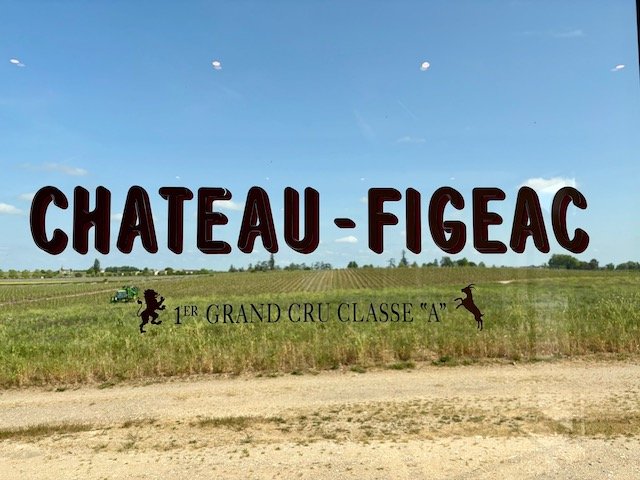
2025 Figeac, St-Émilion (Pre-Arrival) $174.99
98-100TWP 97-99JD 97-99RP 98DC 98JA 96-98VN A more explosive intensity in a polished frame. Cassis, graphite, and violet over fine, powdery tannins. One of the more gravel-based Saint-Émilion wines, and one that belongs in the conversation with the very best of the vintage.
2025 Canon, St-Émilion (Pre-Arrival) $114.99
98-100TWP 98-100VN 98-99JS 96-99RP 96-98JD 97DC 97JA Silky, precise, and with a limestone-driven minerality. Blue and red fruits, baking spices, and a saline, almost weightless finish. One of the most refined wines of the year.
2025 La Gaffelière, St-Émilion (Pre-Arrival) $57.99
97-99VN 96-98JD 96JA Grace and depth at a price that genuinely surprises. Red fruit, crushed stone, and silken tannins. If you buy one value on the Right Bank, this is a very solid bet.
Pomerol: A Clay Vintage
Pomerol's yields were among the lowest in recent history, and the late-August rains that rescued so much of Bordeaux fell lightest of all here. That left these vines to ride out a long, dry summer largely on their own, and what separated the great wines from the merely good came down almost entirely to soil.
Clay was the hero. The deep clay at the heart of the appellation, with its iron-rich subsoil, held moisture when the surrounding gravel and sand could not. The estates sitting on that clay made some of the most compelling wines of the entire vintage: deep, richly textured, full of polished tannin and real volume.
What surprised me is the style. This isn't the plush, immediately seductive Pomerol that wins people over on the first sip. There is more concentration and grip than usual, but also more purity and a cool, mineral edge. The freshness is very apparent, and despite the structure, I suspect many of these will drink well on the early side too. The clay specialists were predictably strong. Vieux Château Certan had the soil to ride out the vintage and it shows, while La Fleur-Pétrus answered with lovely floral purity. And for sheer value, it's hard to look past the Lafleur stable's Le Grand Village in its Vin de France guise, which remains one of the smartest buys in all of Bordeaux.
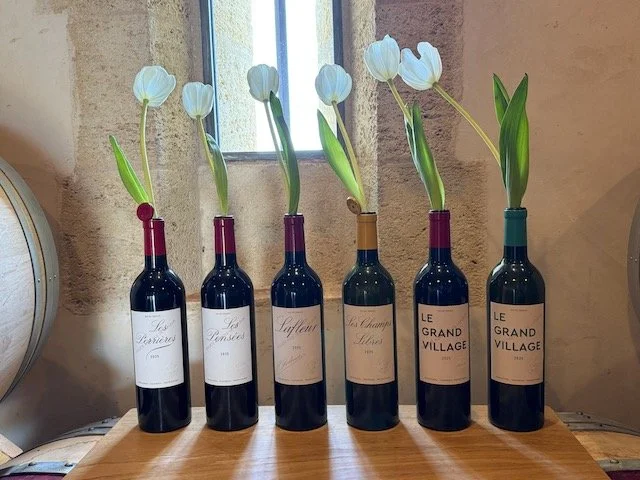
2025 Lafleur, Vin de France (Pre-Arrival) $975.00
97-99JD 97-99VN The first Lafleur to leave the Pomerol appellation on the label, and one of the greatest wines ever made at this address. Endlessly complex, mineral, and profound, in tiny quantity. Unforgettable.
2025 Vieux Château Certan, Pomerol (Pre-Arrival) $199.99
98-99JS 98DC 98JA 95-97JD 95-97VN 94-96RP Dense and a touch reserved in its youth, with real poise and earthy depth. With some air it opened up spectacularly. Classic clay-grown Pomerol built for the long haul.
2025 La Conseillante, Pomerol (Pre-Arrival) $214.99
97-100RP 97-98JS 96-98JD 96-98TWP 96-98VN 97DC 95JA The most polished and elegant of the Pomerol trio. Violet, dark berry, and a supple, seamless texture. Refined, perfumed, and impossible to resist.
- Andrew Shaheen, K&L Vice President of Private Client Services