
Krug’s Exquisite Craftsmanship Shines in Current Releases
In 1843, German immigrant Johann-Josef Krug established the House of Krug in Reims, France, with the vision of producing only prestige sparkling cuvées from the hallowed chalky soils of Champagne, and the House has sat at the intersection of luxury and artistry ever since. No other name in Champagne evokes as much mystique and admiration. Now owned by Moët-Hennessey Louis Vuitton (LVMH), the Krug family is still actively involved (but does not run day to day operations), notably sixth-generation Olivier Krug.
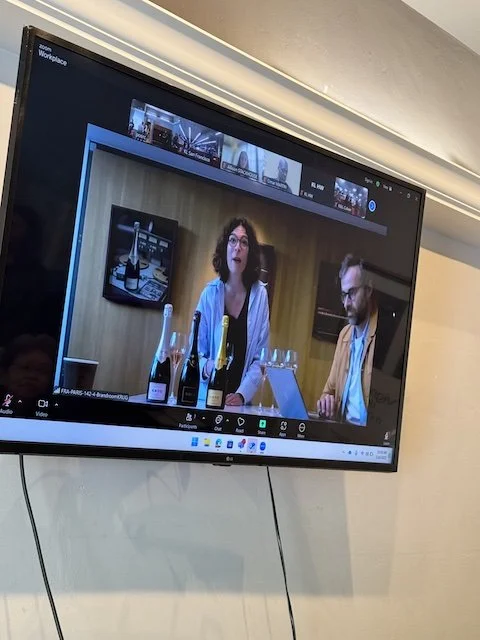
This month, the K&L staff was treated to a first-of-its-kind Krug tasting seminar conducted by Krug’s Director of Education, Julie Boilleau, and Director of Business Development for the Americas, Louis Henrion, whom we Zoomed in direct from Reims, along with Moët-Hennessey’s Director of Northern California, Omar Martin, and Associate Brand Manager for Krug & Ruinart, Allison Stackhouse.
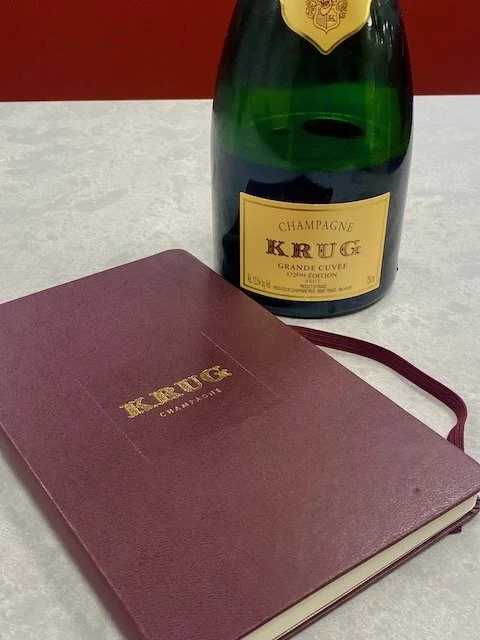
This impressive slate of wine pros guided us through all things Krug while we enjoyed the fruits of their collective labor—the Krug "Grande Cuvée" 172ème Édition Brut Champagne $259.99 97DC 97JS 95VN, Krug 28 Ème Édition Brut Rosé Champagne $449.99 97DC 95VN, and the 2011 Krug Brut Champagne $449.99 98JS 97JD. Krug makes five wines: the “Grand Cuvée,” the Rosé, vintage (current release is the 2011), Le Clos du Mesnil, a single-vineyard and vintage-dated Blanc de Blancs (100% Chardonnay, current release 2009), and Le Clos D’Ambonnay, a single-vineyard and vintage-dated Blanc de Noirs (100% Pinot Noir, current release is 2006). Additionally, Krug releases something really old every now and then and calls it “Krug Collection.” The latest release of Krug Collection is from 1995.
So, what makes Krug, Krug? The terroir? The craftsmanship? The marketing? All of the above? The bottom line is that Krug is the result of an enormous amount of good old-fashioned hard work by hundreds of people, from the workers who pick the grapes by hand to the tasting committee that chooses which vin clairs make it into the blend. The image of beautiful people sipping Krug out of crystal flutes must go hand in hand with people rolling up their sleeves and going to work.
To understand the skill required to craft the perfect bottle of Krug, it is important to note that only people can make Champagne. There is no such thing as low-intervention Champagne. Nature cannot make Champagne. When nature makes sparkling wine, it’s called a Pétillant-Naturel (Pet-Nat). When master blenders make sparkling wine, it’s called Champagne, and the House of Krug is the master of the masters.
Krug’s craftmanship has three pillars. One: individuality. Two: blending. Three: patience. Each plot of wine is fermented by itself to coax out the finest expression of each individual wine. A Chardonnay from Mesnil is fermented separately from a Pinot Noir from Ambonnay, which is fermented separately from a Meunier from Pierry. The character of each terroir is preserved. Krug vin clairs are “born in the barrel,” famously fermented in small 205-liter oak barrels from the Argonne Forest before transferring to stainless steel tanks.
The second pillar of Krug’s craftmanship is blending. The current year’s harvest yields up to 250 individual vin clairs. Add the 150 vin clairs in Krug’s reserve library for a total of 400 individual vin clairs to be tasted, evaluated, and blended. 400! This is where blending becomes art. The wines chosen to become a “Grand Cuvée” are like the instruments used to play a symphony. They must act in concert with one another. Remove one violin or drum and the work falls apart. Together, they can be sublime.
Krug has a seven-member Tasting Committee made up of men and women of different ages and experience, who spend six months blind tasting 400 vin clairs to determine which ones will work most harmoniously with each other. Their work is directed by Krug’s Cellar Master and chef-du-cave, Julie Cavil, who has been responsible for the overall success of each cuvée since 2020.
The last pillar of Krug’s craftmanship is patience. Each Champagne has extended lees aging in their cellar and is made to age in your cellar for at least another 15-30 years depending on the cuvée—if you have the patience to wait that long!
Krug’s flagship Champagne is the Brut multi-vintage “Grand Cuvée.” While Josef Krug set out to produce Champagnes that were equal in distinction and quality, the “Grand Cuvée” is the House’s number one priority. The numbers for the 172ème Edition are extraordinary. 146 different wines from 11 different years, the youngest from 2016 and the oldest from 1998. The final composition is 44% Pinot Noir, 36% Chardonnay, and 20% Meunier. Light, ethereal, yet structured and complex, the “Grand Cuvée” is the pinnacle of the blending art form.
The brainchild of fifth-generation Henri and Rémi Krug, Maison Krug launched its Rosé in 1976 and is now on their 28th release. The Krug Rosé 28ème is considered the most difficult to craft. Adding still red wine, in this case Pinot Noir, to the delicate and airy Champagne blends is like “playing with dynamite.” Édition is a blend of 32 wines from six different years, the youngest from 2016, and the oldest from 2010. Reserve wines make up 38% of the final blend—58% Pinot Noir (10% of which is macerated Pinot Noir wines), 25% Chardonnay, and 17% Meunier. This release is a Brut multi-vintage, but Krug has also released vintage-dated Rosé Champagne in the past.
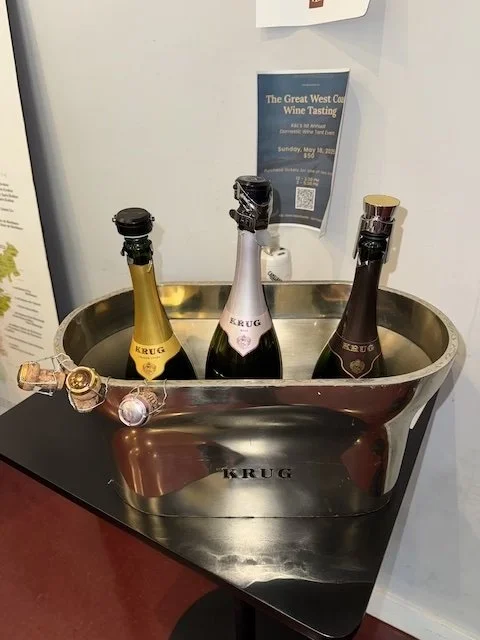
Most, but not all, Champagne tête de cuvées (top bottlings) are vintage. Krug is one of the notable exceptions. However, Krug produces vintage Champagne as well. They just do it in a different way than everybody else. Why the marginal 2011 vintage and not the epic 2012 vintage? The answer shows how Krug’s Champagne-making philosophy is put into action across its operations.
First, Krug does not recognize the concept of marginal years. If Krug decides 2011 has something special that will elevate their Champagnes, they are going to make a vintage release regardless of the overall region’s perception of the year. Second, a remarkable vintage like 2012 has tremendous value beyond a vintage bottling. Krug decided not to make a vintage 2012 because, while fantastic, yields were low. The decision was made to maximize 2012 reserves so they can be used in the “Grand Cuvée” for the next decade.
The 2011 Krug Brut Champagne is 46% Pinot Noir, 37% Chardonnay, and 17% Meunier, and shows all the delicious characteristics of aged Champagne. Omar Martin described it as “generous, elegant, assertive, and whoever gets to taste it is spoiled.” 2011 has the best qualities of two prior vintage releases from 2004 and 2006. Like 2004, a cold year, 2011 has zippy vibrant acidity. Like 2006, a year with heat waves, 2011 is ripe and broad. The combination is another outstanding Krug release that is drinking beautifully now and will continue to age and evolve in the cellar.
You can always experience your own Krug tasting seminar by downloading the very stylish Krug app and entering the unique KrugiD number found on every bottle. The app will give you “the story of its creation, its composition, serving suggestions, pairing inspiration, and more.” Krug has also partnered with world-renowned Michelin star chefs to create recipes with a featured ingredient (e.g., mushrooms) designed to pair with the “Grand Cuvée.”
Lastly, Krug Champagne is always featured at our annual Champagne Tent Event. This year’s event is Saturday, October 18th at our Hollywood location, and Sunday, October 19th, in our Redwood City location. We hope to see you there with a glass of Krug in your hand! A votre santé!
- Philip Roufail, Culver City Champagne Specialist