
Muscadet: The Chablis of the Loire


The title of this article might get me into hot water with some of my colleagues—especially our Burgundy buyer, Alex—but hear me out. I subscribe to the thesis that the new wave of Muscadet coming out of the Loire Valley can offer a strikingly similar experience to drinking classic Chablis—mineral‑driven, saline, and shaped by site—but at a far more competitive price. First a little backstory.
Muscadet surrounds the city of Nantes, sitting at the point where the Loire begins to open into the Atlantic. The soils could not be more different from what you find in Chablis—that classic limestone and marl that defines Chablis' mineral drive and its crushed oyster shell character. Muscadet, by contrast, is a patchwork of metamorphic soils like schist and gneiss, and igneous ones like granite and serpentine—and that's just a short list.
Where the two regions do find common ground is in the expression of their rival grapes. Melon de Bourgogne—Melon for short, and the only variety permitted under appellation rules—is, not unlike Chardonnay, a relatively neutral grape that derives its character from its soils and from how it is produced. For decades, Muscadet's winemakers aged their wines in vast glass-lined concrete tanks, on their lees, with little manipulation beyond some occasional stirring. Those rules kept Muscadet simple and inexpensive, and it earned its place as the quintessential café wine. It was pretty reliably a crisp, easy sip alongside a plate of oysters or as an aperitif. Chablis by contrast was usually aged in neutral vessels like concrete and stainless steel on lees, also producing mineral driven and shellfish-friendly wines. But Chablis has wonderful Premier- and Grand Cru-ranked vineyards that Muscadet did not possess, perhaps until now...
The shift in Muscadet began when producers in the Sèvre et Maine sub-region started the long process of seeking recognition for specific crus that better expressed the complexity of the terroir. It took a few decades, but the result is the Crus Communaux system, which recognizes individual villages for their distinct soil types. The first acknowledged Muscadet Sèvre‑et‑Maine Crus—Clisson, Gorges, and Le Pallet—were established in 2011. A second wave of four more followed in 2019, with additional crus subsequently recognized to bring the current total to ten and perhaps a few more on the way. Think of it as a Premier Cru-level framework: wines with greater depth, definition, and site-specific character than the everyday Muscadets that built the category's reputation. And these mineral Loire Valley white wines remain some of the best QPR in the market—complex and layered, with the kind of tension that demands another sip. Starting to sound a little more like Chablis now.
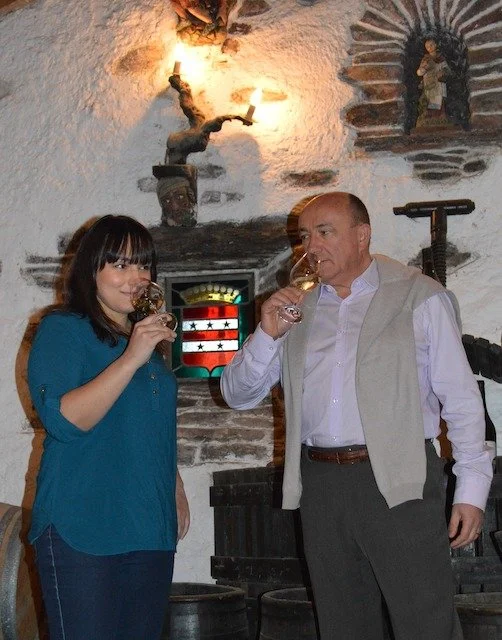
I was recently introduced to the wines of Chéreau-Carré. This family domaine spans a series of estates and vineyards planted across some of the region's best sub-zones, with family roots in the area stretching back to the 11th century. It was Bernard Chéreau Sr.'s purchase of Château de Chasseloir in 1953 that marked the true beginning of the winery, and he proved to be a genuine pioneer. He was the first producer in the region to age Muscadet wines on its lees, a practice that was later codified into appellation rules in 1977. Through the 1960s, additional domaines and parcels were folded into the family's holdings as the operation grew. Today, Bernard Jr. and his daughter Louise—the second and third generations respectively—run the estate together and have been instrumental in shaping the more ambitious, terroir-driven styles now emerging from Muscadet.
This family and their properties offer one of the best lenses through which to understand the region's evolution, and some of the best Muscadet wines. They are committed to extended lees aging and hold wines through extended bottle aging before release—an approach that yields real complexity and depth. They have quickly become one of my favorite new discoveries in the category, and I suspect they will become one of yours too.
2022 Chéreau Carré "Château l'Oiselinière de la Ramée" Muscadet Sèvre-et-Maine Sur Lie $17.99 From vines planted between 1940 and 1980 on orthogneiss soils, L’Oiselinière is a superb expression of classic sur lie Muscadet. Aged for six months on the lees in large concrete vats, the wine is fermented with indigenous yeasts and sourced from entirely hand-harvested fruit—a rarity in the region. This is a serious wine for under $20, offering layered citrus and orchard fruit with a subtle saline edge and a vibrant, persistent finish. One of the strongest values on the shelf right now—and a perfect match for shellfish.
2019 Chéreau Carré "Comte Leloup du Château de Chasseloir" Muscadet Sèvre-et-Maine Sur Lie $24.99 Produced only in top vintages, the Comte Leloup comes from centenarian vines rooted in schist soils. Aged 9–10 months on the lees in tank, it then rests for over two years in bottle before release. While many of the Cru Communaux emphasize extended aging in tank, the Chéreaus take a different approach, demonstrating just how compelling Muscadet can be with proper bottle development. The result is a supple, layered wine that showcases its minerality alongside notes of red apple, stone fruit, and a touch of beeswax. Still just beginning to open, it has plenty of life ahead. Wines of this quality at this price are increasingly rare.
2015 Chéreau Carré "Le Clos du Château l'Oiselinière" Muscadet Sèvre-et-Maine la Haie Fouassiére $39.99 This bottling highlights the depth and potential that the Crus Communaux are bringing to Muscadet. By law, these wines must age a minimum of 18 months on the lees in tank; here, the élevage stretches to roughly 30 months before bottling, followed by over two additional years in bottle prior to release. Now with about seven years of age, the wine is evolving beautifully. Succulent and textural, yet lifted by bright acidity, it shows expressive notes of mango and dried pineapple. With extended lees aging, Muscadet often shifts from citrus-driven profiles into these deeper, more layered fruit expressions—a transformation on full display here. An absolute stunner, and a compelling argument for non-oak-driven white wines with real depth and complexity.