
Meet Our New Buyer: Rachael Ryan
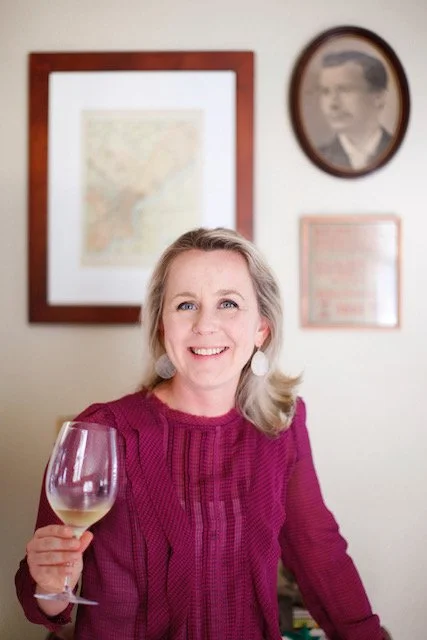
We’re thrilled to introduce a new buyer to our team: Rachael Ryan. This deeply knowledgeable wine pro will be buying for an exhaustive list of categories: Australia, New Zealand, South Africa, South America, Spain, and Portugal. To celebrate her first newsletter with K&L, we sat down with Rachael to get to know her a bit more.
K&L: Tell us about your journey in wine. How did you get your start?
RR: I’ve been in the wine business for over 20 years. It’s hard to pinpoint the exact starting point. I’m originally from Philadelphia and went to college there, where I worked my way through in restaurants. My first job after college was as a newspaper reporter in New Jersey. The pay was not great. So I had a second job working nights at a restaurant in Jersey City. We were the first cool, small bistro in Jersey City with a really cool wine program, and I realized that I liked doing this gig more than the newspaper. Soon after, I started working full time in New York at a restaurant.
I got deeper into food and wine when I traveled in Europe, then went back to New York and found an entry level job at a wine distributor. By then I’d decided I wanted to work in wine. I worked as the Assistant Manager at Neal Rosenthal retail store and was taking some wine courses. Then I moved to Australia to do a Master’s in Gastronomy.
When you have a restaurant background you’ll never go hungry! So while I was studying I worked at a restaurant in Adelaide, then later got a job as a sommelier in Sydney–we had the biggest wine list in the Southern Hemisphere. I was thrown in the deep end–it was a super deep list and this was my first time working as a sommelier. The head sommelier was studying for his Master Sommelier diploma. He’d worked at Gary Danko in San Francisco, and, when I was trying to figure out where to go after Australia, he suggested that I going to San Francisco. So I did. I went to work at Quince. David Lynch, who wrote Vino Italiano, was the head wine director. It was an amazing opportunity.
It was interesting to be in California, selling all these California wines, when no one knew the winemakers or the stories behind the wine. I realized I wanted to go deeper. So Anthony Filiberti from Anthill Wines invited me to go work harvest with them. Then I did harvest at Peay in Cloverville, then Rhys in Santa Cruz Mountains. I thought maybe I wanted to make wine—I was playing around with the idea. Then I worked harvest with a few natural wineries—Donkey and Goat, Two Shepherds—when I realized that making wine is more of a passion project, not super financially viable. So I went back to restaurants and then ended up at Vinfolio. I started in private client sales, then their wine investment program, and eventually started doing the buying—I bought everything, mostly Bordeaux. Our average price point was over $350 a bottle.
K&L: How did you get to the Master of Wine Program?
I was always really into wine education. After Australia, working with the MS, I was inspired to do the Court of Master Sommelier programming. Went through the Advanced Sommelier level and started studying for Master Sommelier. But it didn’t feel like the right fit. So I looked into the Master of Wine program and switched. I’m at the very final stages—I’ve submitted my research paper, and I am hoping to pass shortly. I passed the exam in 2022. It’s much more intensive than the MS exam. There are three days of 12 wines each—12 whites, 12 red, 12 mixed (sweet, sparkling, etc.) and five areas of theory—winemaking, viticulture, wine handling, wine business, contemporary issues.
K&L: With that comprehensive background, you could have done anything! What brought you to buying at K&L?
I really like buying. It’s super interesting to think about where the trends in wine are. I love to introduce new regions to people. The wine world is more dynamic than it’s ever been, and the cool thing about working in the U.S. is that we have access to so much wine from all over the world. There’s no other place that has this range available. In the U.K., for instance, they drink international wine, but they don’t have much local production. The range of wines that K&L has in insane.
K&L: What is your approach to buying wine for your categories?
I have so many regions—seven, possibly eight large and fully distinct countries! I definitely have a deep respect for classic regions and styles and history. There’s a reason why they’re famous and well-established, but I think it’s also really important to be aware of new voices and perspectives. So buying for me is about respecting tradition while exploring new points of view. Like Ministry of Clouds in Australia’s McLaren Vale region—they are looking at traditional styles with a fresh vision.
Same is happening all over Spain, for example. A lot of wine regions are having the conversation about what it means to be “from” a certain region like Rioja, so it’s really important to have knowledgeable salespeople on the floor talking about what each bottle is like.
I love Australian wine. I do think that Australia has the most exciting dynamic selection that people just don’t know how much they like the wines yet. I think it’s the most misunderstood country that I have. Also with all the countries in my buying portfolio, I have the best value-to-price ratio. Even Spain—there are old vines, age-worthy styles, both classic and innovative winemaking—yet it’s still very inexpensive compared to other countries.
K&L: If people could pick up one bottle from across your categories, what should it be?
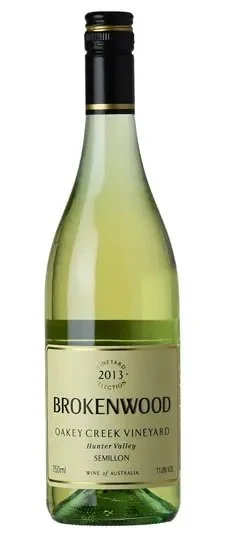
I’m really hot on Australia—it’s the size of the U.S,. and, if you look at the map, the way the wine producing is spread out, the terroir is more diverse than the U.S. There’s a huge array of terroir and climates. I love Sémillon from Australia so I would choose the 2013 Brokenwood "Oakey Creek" Sémillon Hunter Valley New South Wales $29.99 95JH. There’s nothing like it anywhere else. The two regions in the world where Sémillon really matters are Bordeaux–white Bordeaux and Sauternes—and Australia. It somehow got to Australia, and it’s become it’s own signature style. It’s so different, so specific to this corner of the world; it has nothing to do with Bordeaux. There’s some old-vine Sémillon in Chile and some in Napa, even Mondavi always had Sémillon. But not many countries are doing 100 percent Sémillon. And the wines completely transform under the screw cap. They are fun, summer sippers, then you age them under screw cap and something magical happens. They become nutty and complex and so interesting. I want to debunk the screw cap. I would hope by now customers know that screw caps have nothing to do with the price point or quality, but rather it’s an assurance that the wine is technically. Wines can age incredibly well under screw cap.
You can check out some of Rachael’s lineups this weekend! We’re pouring Portugal on Friday and the Pioneers of Australia on Saturday. Check out our events page for tickets and details.