
Our Spanish and Portuguese Expert’s Wine Roundup
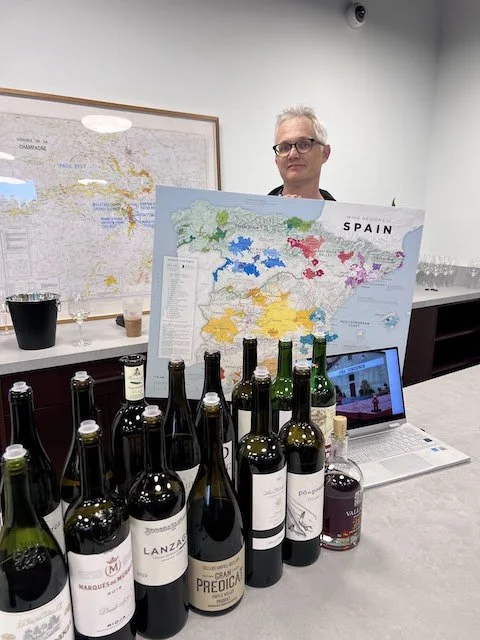
One of my favorite things about the Iberian Peninsula is that there is always something new to be discovered. I have been on my wine journey for a long time, and I am still always finding new things on this peninsula—and it is my job to know these things! Sometimes it is a region: a place where grapes have been grown for centuries but maybe is too isolated or too small to have rated as an appellation—that is until the world finds out the exceptional wine that is being made there. Sometimes it is the reimagining of variety or a style. And I always love discovering new grape varieties. There are so many great wines out there it is all too easy to overlook the off the beaten path wines. But I’m here today to bring you a few to discover on your own wine journey.
2022 Tantaka Tinto Arabako Txakolina $25.99 Here is a wine that has stretched my imagination! This is a Txakolina that is quite different from what you might expect from this type of wine. This is not a light, crisp wine with a little trapped CO2; it is crisp, but it has texture from lees aging, no CO2, and a distinctive flavor. Here we can see that Hondarrabi Zuri has real character: orchard and citrus fruits backed with delicate herbal, floral notes and of course that seaside saltiness that makes these wines great. This is a “Rosetta Stone” wine—it clearly gives us the flavors of the region and that helps us further understand those traditional wines.
2021 Viñedos Lopez "La Bodegaza" Blanco Valdejalon $29.99 Here is a regional discovery. Valdejalon is not an appellation, it is a small region in Aragon that is not too far from Zaragoza. The vineyards for Viñedos Lopez are the only ones in this area, and they are in an ideal location—in the mountains at high elevation with a small river nearby. The temperature-moderating location makes this an ideal place for white wine (while the surrounding area is best known for the bold reds). This is organically and regeneratively grown Garnacha Blanca from bush-trained vines that are over 60 years old. After a brief period of skin maceration, the wine was fermented in 600L French oak barrels. This is an argument for the nobility of this varietal. This drinks like a cross between white Burgundy and white Châteauneuf-du-Pape. It has the acid and minerality of the former with the complexity of the latter, all the while expressing the flavors of the variety. This is a true diamond in the rough.
2022 Celler del Roure "Cullerot" Blanco Valencia $19.99 Here is another discovery, Valencia is red wine country. Here Monastrell and Bobal are king. This wine comes from a similar local as the above wine. Grown in an isolated mountain valley where elevation and proximity to water give the white varietals in the vineyards a chance to shine. This is a crazy field blend of organically grown native Iberian varietals two of which were new to me; Pedro Ximénez, Macabeo, Tortosina, Malvasía, Verdil, and Merseguera. This was tank fermented with native yeast and then aged in hundreds-of-years-old amphorae that were discovered on the property. That alone should make you a little curious about this wine. This is a beguiling wine—the aromatics alone make this wine. Layers of herbs, flowers, and other botanicals with a vibrant mix of fruit. Medium-light bodied on the palate with crisp acidity, this wine begs for seafood. If we were only in Spain! But we can make due here.
2022 Passágem Reserva Branco Douro $24.99 Most people who have traveled to Portugal come back with some level of appreciation for white Port, because they had the fantastic aperitivo white Port tonics. Most people do not think of the region making white Port, let alone white wine. If there was one region in the world making it harder on themselves on all levels it is the Douro Valley—it is an unbelievably beautiful place, but an incredibly challenging place to make wine. One of the biggest hurdles for us native English-speaking wine drinkers is learning the over 90 different varietals grown here! To winemakers in the region the grapes do not matter, it is the vineyard. But I am a very curious drinker, so I love knowing that this wine is a blend of Arinto, Gouveio, Viosinho, and Rabigato grown in the schist soils of the Douro Superior, the region that is the warmest and furthest east. White wines from the Douro are some of my favorite wines in the entire world. This is a place where high acid and minerality meet rich texture and crazy complex flavors, there are few places in the world that can do all of those. This is a perfect introduction to the region and the style.
2022 Descendientes de José Palacios "Corullon" Bierzo $54.99 Descendientes de J Palcios is the producer who put Bierzo on the world map and is arguably one of the two most important producers in the region. Corullon is the wine that showed the region could make wines that can compete with the best wines in the world. All of the fruit for this wine comes from vineyards surrounding the village of Corullon. Over the last 10 years the appellation of Bierzo has been trying to establish a Burgundian-like hierarchy, and this wine now falls under the classification of Vino de Villa, a single village wine. Let us just say, Corullon is the Vosne-Romanée of Bierzo. Some of the most important single-vineyard wines come from the slopes surrounding this village. It was the old vineyards on the slopes of these hills that drew Palcios to this region in the first place. Here we have a blend of sites where the youngest vineyards are 75 years old and there are parcels that are over 100. What village wine, from any region, has that? It is the old vines in the very poor stony soils that are on the top of the slopes that give this wine its personality. This is a field blend of mostly Mencía mixed with a little Alicante Bouschet and a small percentage of white varieties. This delivers the breadth and depth of aromatics that the region is known for—a mix of berries, red and dark skinned, that are bright and pure, then that wild mountain mixture of flowers, herbs, and stones. Everything is woven together so no one element dominates your attention too long, you want to spend time with this wine. On the palate there is a presence and persistence to this wine; it just has more without it being a big and dominating wine. Bierzo always has a little more stuffing, not quite Côte-Rôtie but bigger than any Burgundy. The tannins are fine and present the acid is mouthwatering, pulling the wine across the palate and bringing attention to the length of the flavors. Captivating and delicious now, this is a wine that when you pull it out of the cellar 10 years from now will be a showstopper.
2019 Luis Cañas "Reserva de la Familia" Reserva Rioja $49.99 This is a one-of-a-kind Rioja. In the mid 1980s the Canas family received permission from the appellation to plant an experimental vineyard of Cabernet Sauvignon. This is not a varietal that is allowed in the blend of Rioja, except when coming from this vineyard and being made by this producer. Now we see these grapes blended in other regions in Spain but there is something very special about this combination. It could be the age of the vines—almost 40 for the Cab and over 50 for the Tempranillo—but the real reason is the clay limestone soils of Rioja Alavesa. The wine was aged for 20 months in mostly new oak barrels, a 50/50 mix of French and American oak. This is classic Rioja with a subtle Bordeaux twist. This does everything you want a Reserva to do but with a little more structure and a deeper, more complex aroma and flavor profile. This really is a mix of Rioja and Bordeaux! Dark red fruits backed by earth, spice, and leather with a subtle graphite and tobacco note. This is a full-bodied wine with lots of presence but neither the oak nor the Cabernet dominate the wine; everything is composed, it just is a little fuller and deep. This wine has a great finish where the darker earthier elements of the Cab lift the more vibrant Alavesa Tempranillo fruit. I wish that there were more wines like this.