
Demystifying Some of Burgundy’s Top Communes
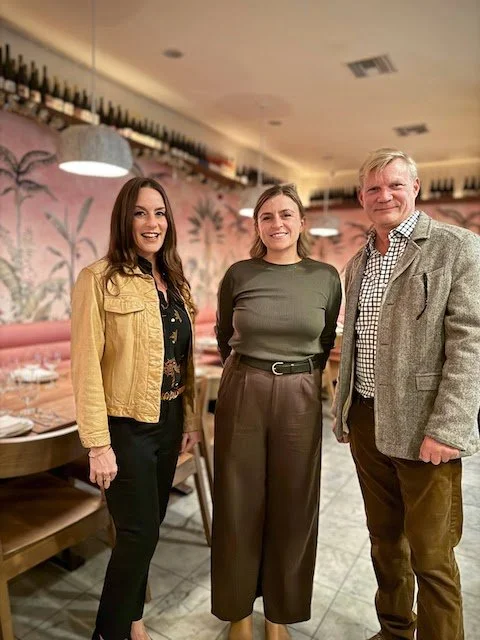
Chelsea Herholdt (center) with the Private Client Services team.
We see it constantly: customers interested in Burgundy but intimidated by the complexity and nuance and overall high barrier to entry. Even those comfortable discussing a few favorite bottles may struggle to navigate an unfamiliar shop or wine list. While nuanced producer knowledge represents the pinnacle of Burgundy expertise, nearly 2,000 years of terroir knowledge is why the region is both revered and yet so complicated. Soil, slope, aspect, and weather are critical for finicky Pinot Noir and ripening-sensitive Chardonnay. Luckily, understanding a few top villages can immediately bring clarity, making it possible to move from overwhelmed to confident.
This quick reference guide will cover four major regions across both the Côte de Nuits, the more northerly section, and the Côte de Beaune, with a focus on reds. To remember the orientation of the two major subsections, I use the (N) in (N)uits to remember North, and the (B) in (B)eaune: the Côte de Beaune is on the (B)ottom.
To start, understanding Gevrey-Chambertin provides a quick return on investment: it sits near the northern limit of the Côte d'Or and boasts nine essential Grand Crus. At the center lies the small town of Gevrey-Chambertin, with foundational vineyard sites rippling outwards.
South of the town lie the coveted Grand Crus, all of which handily include "Chambertin" in their names, sitting on a gentle, east-facing slope, protected by a tempering forest above them. The Grand Crus are largely planted on compacted limestone, layered with varying types and depths of clay topsoil. With a variety of rock deposits, Gevrey exhibits some of the most diverse soil in all of Burgundy. The general consensus is that being farther north with more brutal soil types lends to a more "muscular" style of wine, though modern and more elegant producers like Domaine Rossignol-Trapet may take issue with such generalizations. As time passes, modern practices and a changing climate are forcing a reevaluation of generalizations formed over centuries.
For those looking to explore Gevrey, the 1er Crus from Domaine Geantet-Pansiot are an approachable starting point, such as the Poissenot, which sits near the top of famed Clos St. Jacques. Clos St. Jacques is worth noting alone, as many consider it to produce "Grand Cru–level" wines, but its price point, depending on the producer, can be a bit more inviting than that top tier. At risk of completely contradicting myself, for those looking to experience the absolute crème de la crème of Gevrey, the 2009 Domaine Armand Rousseau Gevrey-Chambertin 1er Cru "Clos Saint Jacques" $1,311.99 94BH 94JG 94ST 92WA is just about the pinnacle one can find.
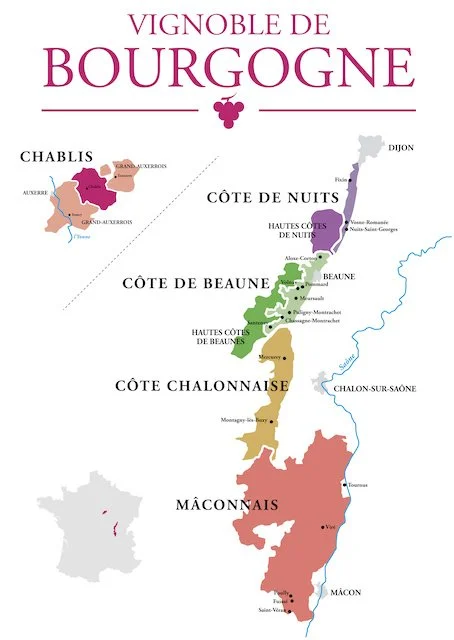
Another key duo of villages that are often discussed in tandem are Vosne-Romanée and Flagey-Echezeaux. Despite their smaller size, they assuredly occupy an inordinate amount of space in every Burgundy lover's head. The hallowed Domaine de la Romanée-Conti sits on this worshiped clay-limestone ground, encompassing two Grand Crus that are DRC monopoles—La Tâche and Romanée-Conti—and of course, command prices to match. Stylistically, Vosne is known for perfumed, elegant wines, but don't confuse elegance with simplicity, as these are often among the most age-worthy and distinctive Burgundies.
For those looking to explore the finest from Vosne-Romanée, a few bottles and producers standout. The 1er Cru Les Orveaux from Domaine Mongeard-Mugneret when available is a great buy, as well as fan-favorite Aux Brulées from the likes of Gérard Mugneret (current release: 2023 Domaine Gerard Mugneret Vosne Romanee 1er Cru "Aux Brulees" $459.99 93-95WA 92-95JM 92-94VN 90-93BH). Domaine de L'Arlot's Les Suchots is another top 1er Cru selection (current release: 2023 Domaine de L'Arlot Vosne-Romanée 1er Cru "Les Suchots" $299.99 95JS 94TA 92-94JM 92-94VN). Worth seeking out is Domaine Anne Gros. In a recent tasting, Domaine Thibault Liger-Belair was a clear standout, of which we currently have several offerings from the strong 2022 vintage well worth a try. While not a Vosne-Romanée designate, at $65, the 2022 Domaine Thibault Liger-Belair Côte de Nuits-Villages Rouge "Au Leurey Vigne 1937" $64.99 91-93JM 91WS 89-91VN is an absolute gorgeous entry point to the producer.
From the Côte de Beaune just a bit further south, Savigny-Lès-Beaune is one of the largest wine-producing regions, meriting some attention here. It may not have Grand Crus, but it does have 22 1er Crus and a large footprint in the Burgundy market. The region produces both reds and whites. Don't be fooled by the lack of Grand Crus—iconic producers like Domaine Simon Bize et Fils call Savigny home, and while they have Grand Cru holdings elsewhere, their 1er Crus here demonstrate the region's capability and value. And, Domaine Leroy makes a 1er Cru Narbantons from the region as well, so the wise will not let the lack of Grand Crus steer you away from these hallmark Burgundies.
To explore this underrated region, The 2023 Domaine Bruno Clair Savigny-Les-Beaune 1er Cru "La Dominode" $119.99 96-97JS 95DC 94TA 92-94WA is a great place to start. It is made from vines planted in 1902, and earned scores that put it squarely next to some of the top wines of the vintage so far, and has an inviting price point to boot. The 2023 Domaine Bruno Clair Savigny-Les-Beaune 1er Cru "Les Jarrons" $89.99 91-93VN 89-92BH 89-92JM from Bruno Clair is an excellent sub-$90 option that will bring much joy for the next decade.
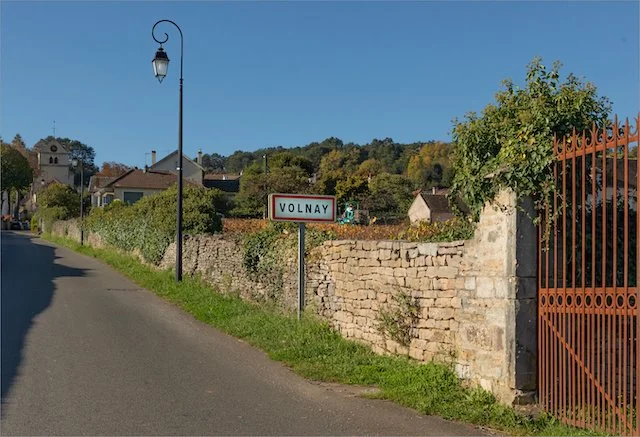
Last but far from least, the wines of Volnay are often hailed as the most elegant, ethereal, and gorgeous in the Côte de Beaune. This is mostly attributed to the vast majority of Volnay sitting on a band of Bathonian limestone, with markedly less clay than its more rustic neighbor Pommard. Some of the most complex wines come from the hard marl and high chalk soils of Taillepieds and Carelle-sous-la-Chapelle, with Taillepieds well represented by Domaine de Montille. Domaines like Domaine Lafarge have pioneered the "cult" status, but the list of highlight names worth pointing out is not limited to the likes of Domaine Marquis d'Angerville and aforementioned Domaine de Montille.
This is by no means an all-encompassing Burgundy overview, but these four villages offer a solid foundation for anyone looking to demystify the region and encouraging a sense of wonder and excitement for this historic, fundamental wine region.
- Chelsea Herholdt, Senior Private Client Services Specialist