
Muscadet: Loire Valley's Freshest White Is Still Under the Radar

When I first started in the wine industry nearly thirty years ago, customers returning from France would often ask for Muscadet. The common response? It doesn’t travel well, and what does make it here isn’t worth your time or ours. In hindsight, I think we were missing something.
Sure, the first examples I tasted back then were often simple, sometimes flat. Many were produced at scale and lacked distinction. But there was always something quietly compelling about the light notes of apple, pear, oyster shell, and that hint of salty air. I understood why travelers who’d sat in seaside cafés with a plate of oysters and a crisp glass of Muscadet wanted to find that experience again. When it’s done right, Muscadet can scratch the same itch as a good Chablis, but for a fraction of the price.
Things began to shift in the early 2000s. Smaller, family-run estates started bottling more of their own wine and focusing on quality over quantity. The industrial mindset started to give way to thoughtful farming and more serious winemaking. Then in 2011, something bigger changed—the region formally recognized its top terroirs with the creation of the Crus Communaux.
Like what happened in Beaujolais with its crus, Muscadet began highlighting specific geological zones capable of producing wines with aging potential. The first three—Clisson, Le Pallet, and Gorges—set the tone, and now there are ten official crus. These wines are aged longer on the lees (usually 17–30 months, depending on the cru), and they offer a completely different experience from the classic sur lie style. The best of them are structured, mineral, and textured—serious wines hiding behind a humble name.
Here are two producers currently on our shelves that I think will help highlight my journey through the region—and might inspire you to embark on your own.
Domaine Delaunay
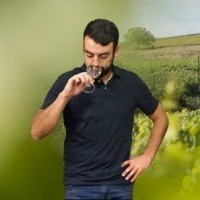
One of the emerging stars of Muscadet is Domaine Delaunay located in the commune of Loroux-Bottereau. They are in the Cru region of Goulaine, known for its mix of metamorphic rock including gneiss, mica-schist, and leptynite with veins of the Amphibolite rocks running throughout the soils. That's a lot of minerals, I daresay, and illustrates the complex soil types that can bring out Muscadet's best features. Florent Delaunay returned to his family vineyards in 2017 following in his father's footsteps. He took over managing the vineyards in 2020 and began the conversion to organic farming. These two offerings are the perfect way to illuminate the different levels of this region.
2023 Domaine Delaunay "Le Val Fleuri" Muscadet Sèvre et Maine Sur Lie $12.99 92WE If you like Albariño, Grüner Veltliner, or unoaked Chardonnay, Muscadet should be squarely on your radar. The region is turning out fresh, mineral-driven whites with acidity that’s vibrant but not harsh, and a core of orchard fruit and stone. Melon de Bourgogne, the grape behind Muscadet, is often called “neutral,” but so are Chardonnay and Albariño—it’s all about what you do with it.
This is estate-grown, organically farmed, and a killer value. The Val Fleuri shows off fresh melon, Golden Delicious apple, and that classic wet stone and sea breeze character. Perfect for oysters, but it’s a no-brainer aperitif as well.
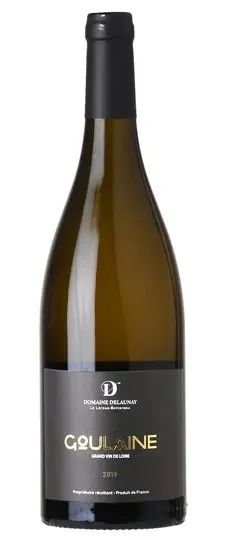
2019 Domaine Delaunay Muscadet Sèvre et Maine “Goulaine” $19.99 94WE Goulaine is one of the Muscadet Crus, and it’s one of the most intriguing. Like in Beaujolais, once the region started digging into its geology and defining its best zones, the wines began to reflect that sense of place more clearly. In Goulaine, extended lees aging (usually 24–30 months) brings out depth, richness, and complexity.
This is one of those wines that can genuinely make you pause—dried pear, quince, and marzipan with a long, savory finish that echoes aged white Burgundy. It’s beautiful with roast chicken, crispy potatoes, and a chèvre salad—anything where texture and subtlety matter.
Domaine Gadais Père & Fils
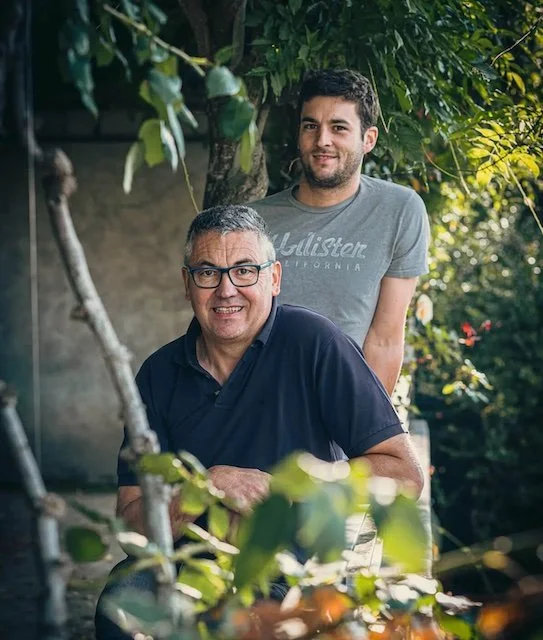
In a region that used to be known for anonymous white wine, Gadais Père & Fils stands out for doing things differently—and for doing them early. In 1952, Louis Gadais became one of the first growers in Muscadet to bottle his own wine. That was a big step in a place where most fruit was being shipped off to co-ops.
Today, the domaine farms over 50 hectares in St-Fiacre, with nearly a hundred different vineyard parcels. Everything is planted to Melon de Bourgogne, but what makes their wines distinctive is the diversity of soil types: orthogneiss, mica schist, amphibolite, and sandy topsoils all play a role. These metamorphic rocks give their wines a mineral backbone and a sense of lift.
Gadais works sustainably, and while their wines are clean and approachable, they also have real depth—especially when aged on the lees. They’ve mastered the balance between texture and freshness.
2023 Gadais Père & Fils "Domaine de la Tourmaline" Muscadet Sèvre et Maine Sur Lie $15.99 A classic introduction to the Gadais style. Crisp, salty, and full of bright melon and pear fruit. This is their everyday wine, but it’s all estate fruit, grown with care and precision. A great entry point for anyone just starting to explore Muscadet.
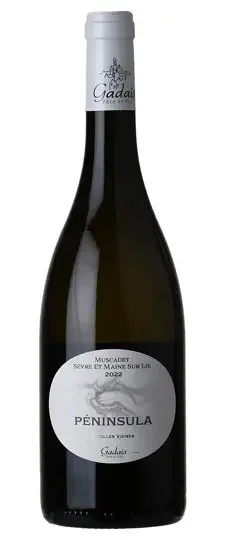
2022 Gadais Père & Fils "Peninsula Vieilles Vignes" Muscadet Sèvre et Maine Sur Lie $19.99 95DC 94JG This is where things get serious. The Peninsula cuvée comes from the oldest vines on the property—one parcel dates back to 1929—planted on a plateau rich in mica schist and gneiss. The lees aging adds weight and texture, but there’s still a core of acidity that keeps everything in balance. Apple skin, pear, a touch of beeswax, and that saline edge—it’s complex, structured, and surprisingly age-worthy. This is a wine that edges into Chablis territory, both in style and food pairing. Think monkfish, halibut, or even a classic sole meunière.
Muscadet may still be flying under the radar, but with producers like Gadais and Delaunay leading the charge, it won’t stay that way forever. The value is undeniable, the wines are authentic, and the terroir is finally being allowed to speak.