The 2025 Bordeaux En Primeur campaign has generated more questions than any vintage in recent memory—about quality, pricing, tariffs, and whether to buy now or wait. Here are the answers to the questions we're hearing most from collectors, with links to the full analysis where relevant.
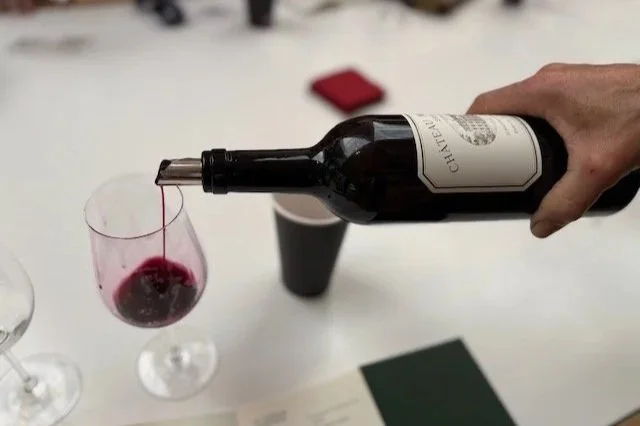
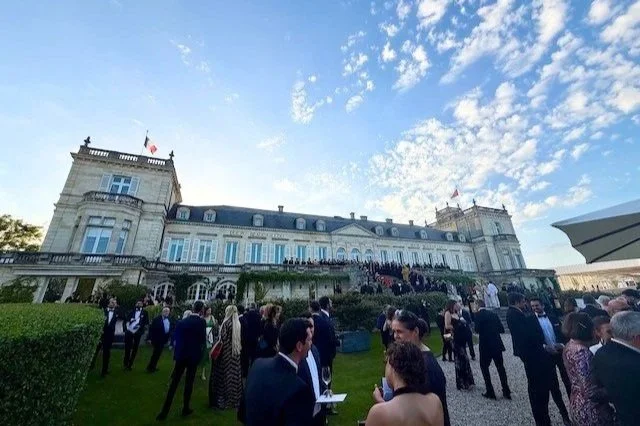
I don't think Bordeaux 2025 compares to anything else, from the growing season to the En Primeur campaign. Harvests were as early as they've been since 1989 and yields were as low as they were in 1961. The solar vintage seemed to hint at 2022, but the result is something far more restrained. It's with these thoughts that I'd advise throwing all other vintage comparisons out the window and consider 2025 like this: there are a lot of remarkable wines that are very refreshing in style, complex in structure, and at prices that range from sharp to can't miss.
When speaking of Bordeaux, Graves and Pessac-Léognan are often left out of the conversation when discussing the Left Bank/Right Bank divide. This is a glaring omission. Some of the region's best wines and values can be found here—and in 2025, the appellation delivered at every level, from the grand crus to the everyday drinking wines, and from the reds to what may be the finest dry whites of the entire campaign.
2025 Bordeaux is one of the strongest vintages in recent memory, released at prices that may not last. The campaign is winding down, larger formats are going first, and the best allocations are already moving. Here is how to make sure you don't miss it.
Where the Left Bank impressed with structure and precision, the Right Bank was about texture. We spent the first half of our trip across the Médoc and Pessac-Léognan, and the wines were stunning. But the moment we crossed to the Right Bank, the whole character of the vintage shifted under our feet. Where the usual suspects of the Haut-Médoc and the Graves showed depth and promise, the Merlot- and Cabernet Franc-dominated wines of Saint-Émilion and Pomerol gave us something more generous—silky, expressive wines layered with minerality.
The 2025 Left Bank delivered across all four major appellations—but not uniformly, and not in the way recent vintages have prepared us for. Pauillac produced wines of extraordinary density off half the usual crop. Saint-Julien was the steadiest appellation of the entire campaign, top to bottom. Margaux, rescued by sixty millimeters of rain at exactly the right moment, was the appellation of the vintage. And Saint-Estèphe's clay gave the commune a tension the south had to chase. Here is what we found.
If you asked me to describe my perfect Bordeaux vintage, I'd say good concentration, purity, freshness, with moderate levels of alcohol. Balance and full ripeness, but with a sense of weightlessness and texture. That is very nearly exactly what 2025 delivered.
This is a fascinating time for Bordeaux. The wines are as good as they have ever been, and pricing for many releases has fallen to levels that remind us of campaigns from a decade ago. Few regions in the world can offer this combination of pedigree, quality, ageability, and value.
Premier week in Napa Valley is not a casual affair. Sunrise departure out of LAX, a Sacramento pickup, a quick team rendezvous—and suddenly we were off to two tightly packed days of tastings, sub-appellation deep dives, and enough Cabernet to recalibrate the palate for weeks.
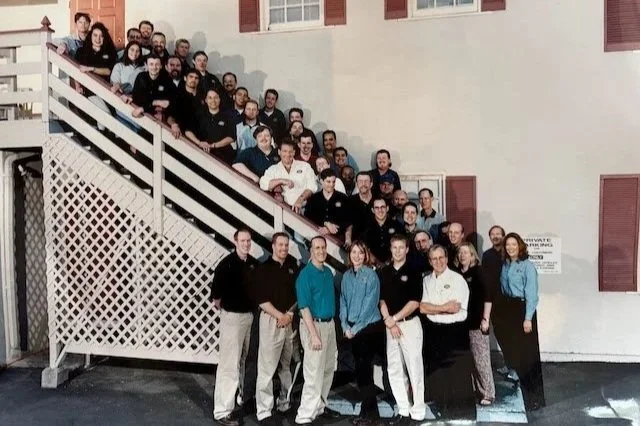
This year, we have the great honor of celebrating K&L’s 50th anniversary! Back on New Year’s Eve 1976, when K&L Liquors opened its doors in Milbrae, it’s hard to imagine that owners Todd Zucker and Clyde Beffa would have had any idea the longevity, not to mention the impact, that their small business has enjoyed. From selling cigarettes and Everclear to becoming one of the preeminent Bordeaux merchants on the West Coast, K&L has been able to stay nimble as times change, while still offering affordable prices and exceptional quality.
February offers a fresh look at the depth and range of American wine, and this month’s domestic lineup at K&L shows just how compelling and approachable the category has become. From sharply priced, high-scoring Napa Valley Cabernet to small-production Oregon Pinot Noir and Chardonnay with a real sense of place, these bottles highlight the sweet spot where pedigree meets value. We’ve also taken on one of our favorite challenges: just how well can you drink for under $30? Very well, as it turns out. Alongside those everyday standouts, you’ll find a selection of luxurious 97–100-point whites and reds suited for collectors and special occasions alike. Whether you’re refilling the cellar, discovering new producers, or hunting for benchmark bottles without benchmark prices, this newsletter will guide the way. And don’t miss our upcoming in-store tastings and events, where many of these wines come to life in the glass.
As the Domestic Wine Buyer at K&L the part of my job that takes up the vast majority of my time and effort is making sure we have a best-in-class selection of wines that over-deliver on value for money. I taste hundreds of wines every week, travel to wine regions to seek out new talent, and work with dozens of suppliers to try and find you the very best deals in wine, and to do so without cutting corners on quality, and still focusing on small production, artisanal wines.
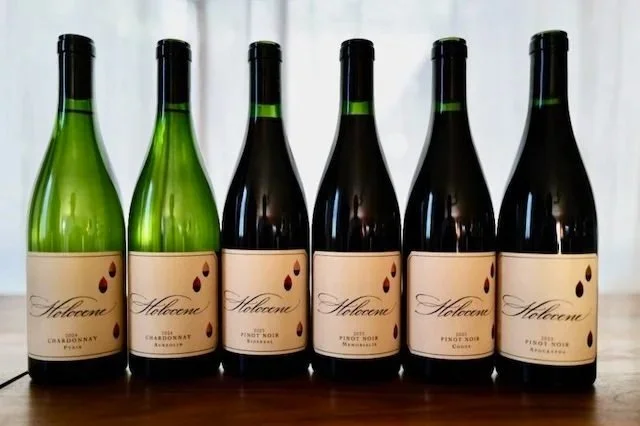
The Holocene wines are some of the most exciting wines I’ve seen out of Oregon in the past few years. They’re very small production wines, typically only a few hundred cases of each bottling. The wines are made with precision and poise but without too much winemaking input. Native yeasts, minimal intervention, modest use of oak. The purity of all the wines is compelling, as is their vibrancy and transparent sense of place.
When starting to write this article I asked Google what I should expect to pay for high-quality, top scoring Napa Cabernet. The answer was $200 to $4000 per bottle! Well, I thought, we can do better than that. So I decided to write a list of what I consider to be some of the best of the best Napa Valley wines—these all deliver exceptional quality, respected pedigree, cellaring potential, and massive critical acclaim. Then I gave myself a budget not to exceed $100 per bottle, and here’s what I came up with.
When you talk about Angelo Gaja, you aren't just talking about wine. You are talking about a revolution. I mean, we take it for granted now that Italian wine stands toe-to-toe with the best of Bordeaux and Burgundy, but back in the 1960s and 70s? That was absolutely not the case. Piedmont was rustic. It was traditional. It was a place of giant, old casks and farming methods that hadn't changed in a century.
Few wines in all my buying categories bring me as much joy as the humble Côtes du Rhône. From reds to whites, these wines offer some of the best daily drinking at prices that still defy the market. Each of the producers featured here are small, family-run estates, and what they put in the glass for the cost simply transcends everything else in the category. Many are certified sustainable and/or organic, emphasizing care in both vineyard and cellar.
February is all about Champagne at its most thrilling. From the laser-focused precision of Damien Hugot to the beautifully mature old-vine depth of Fallet-Dart, this month’s selections celebrate grower brilliance and grand marque mastery alike. We spotlight collectible bottlings of Cristal, revel in Pinot Noir–driven power, and savor the final allocations of Krug Grande Cuvée 172ème Édition. Plus, we honor the enduring elegance and innovation of Laurent-Perrier. Whether you’re cellaring icons or discovering new grower stars, there’s never been a better time to explore Champagne’s latest treasures.
Directly next door to Château Rayas, the wines of Font de Courtedune remain one of the Southern Rhône’s best-kept secrets. Vigneron Caroline Charrier views herself as a steward of the land, farming gently and crafting her wines with whole-cluster fermentation and native yeasts to preserve purity and site expression.
Passed down through four generations and now managed by Thibaut Chamfort, Domaine de Verquière has been certified organic since 2014. Their Côtes-du-Rhône, a blend of 80% Grenache and 20% Syrah grown on chalky clay soils dotted with large pebbles, is one of my favorite everyday reds from the South of France.
Founded in 1930 by Italian émigré Nicolas Benedetti, Domaine Benedetti has deep roots in the Southern Rhône. The estate transitioned to organic farming in 2000 and today encompasses 4 hectares in Châteauneuf-du-Pape and 10 hectares in Côtes du Rhône. Now led by Christian Benedetti, the domaine is guided by a minimalist philosophy in the cellar, resulting in wines that emphasize purity, balance, and honest expression of place.